1. The Question itself reveals an Evolution in the Way We think about Coverage
For the better part of the last three decades, the discussion on reaching remote or underserved regions by air has been described as a choice between satellites and ground infrastructure. The rise of feasible high-altitude platform stations has brought another option that doesn't fall neatly into either of the categories That's exactly what can make the difference interesting. HAPS aren't trying to replace satellites everywhere. They're competing in specific instances where physics operating at 20 kilometers rather than 500 or 35,000 miles yields better results. Understanding whether that advantage is actual and not is the whole game.
2. Lasting latency is where HAPS succeeds In a Straight Line
The speed of transmission is determined by distance, and distance is where stratospheric platform have an undisputed structural advantage over every orbital system. Geostationary satellites are located around 35,786 kilometers above the equator. This produces time-to-travel latency around 600 milliseconds. That's enough for voice calls albeit with noticeable delays, but not so great for real-time applications. Low Earth orbit satellites have dramatically improved this, operating at 550 to 1,200 kilometres with latency in the 20-40 millisecond range. A HAPS car at 20 kilometers has latency estimates comparable that of terrestrial satellites. In the case of applications that require responsiveness like industrial control systems, financial transactions, emergency communications direct-to-cell connectivity the difference isn't insignificant.
3. Satellites Win on Global Coverage and that's a Big Deal
The stratospheric platform that is currently being developed will cover the entire planet. Just one HAPS vehicle covers a region-wide footprint that is enormous in comparison to terrestrial dimensions, but limited by. For global coverage, you'll need the use of a number of platforms across the globe and each requiring its own operations, energy systems, and station-keeping. Satellite constellations, and especially huge LEO networks, cover the planet's surface by overlapping cover in ways stratospheric infrastructure cannot replicate with existing vehicle counts. Applications that require truly universal coverage (marine tracking, global messaging, and polar coverage -- satellites remain an option of the highest quality at scale.
4. Resolution and Persistence Favor the HAPS program for earth Observation
If the task is monitoring an area continuously - -following methane emissions through the industrial corridor, watching the spread of wildfires in real time as well as monitoring oil contamination in the aftermath of an offshore disaster -- the persistent and close-proximity character of a stratospheric platform produces data quality that satellites struggle to match. A satellite operating in low Earth orbit traverses any point on the floor for minutes at time as well as revisit intervals that are measured by hours or days, depending on the size of the constellation. A HAPS vehicle that has a fixed position above the same region for weeks, provides continuous observations by utilizing sensor proximity for an even higher resolution in spatial space. for stratospheric purposes in earth observation persistence is often valued more than its global reach.
5. Payload Flexibility is an HAPS Advantage Satellites can't readily match
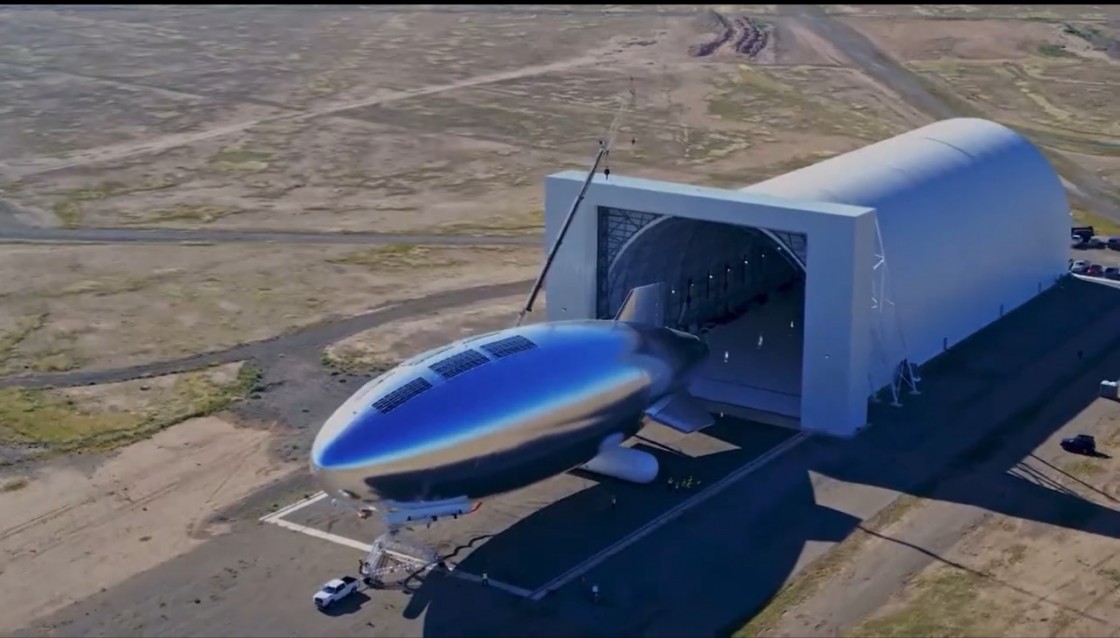
After a satellite has been in orbit, its payload becomes fixed. In order to upgrade sensors, swapping out communication hardware, or adding new instruments is a matter of launching an entirely new spacecraft. The stratospheric platform returns back to earth after missions so its payload can be modified, reconfigured or completely replaced when requirements change in the mission or advances in technology become available. Sceye's airship is specifically designed to support meaningful payload capacity, enabling combinations of telecommunications antennas carbon dioxide sensors as well as disaster detection systems in the same aircraft -- a flexibility that would require multiple dedicated satellites to replicate each with a distinct price for launch and an orbital slot.
6. The Cost Structure is Fundamentally Different
Launching a satellite involves the costs of rockets along with ground segment development, insurance and acceptance of the fact that hardware malfunctions in orbit will be permanent write-offs. Stratospheric platforms operate much like aircraft -- they are able to be recovered, examined in repair, redeployed, and returned. This doesn't automatically mean they're cheaper than satellites based on a basis of coverage area, but it impacts the risk profile and upgrade costs significantly. If you're a business trying new offerings for new services or entering market the ability to recover and modify the platform rather being able to accept orbital technology as a sunk cost gives them a distinct operational advantage for the HAPS sector, especially in its early commercial phase the HAPS industry is going through.
7. HAPS could be used to provide 5G Backhaul Where Satellites Cannot Effectively
The telecommunications technology enabled by the high-altitude platform station that operates as a HIBS (which is effectively a cell tower in the sky -- is designed to connect with modern mobile networking standards that satellite typically does not. Beamforming with a stratospheric telecom antenna permits dynamic signal allocation across a larger coverage area that supports 5G backhaul to the ground infrastructure as well as direct-to-device connections simultaneously. Satellites are becoming more capable in this field, however the fact that they operate closer than the ground allows stratospheric antennas an advantage in terms of signal quantity, frequency reuse and compatibility with spectrum allocations made for terrestrial networks.
8. The Operational Risk and Weather Variation Differ dramatically between the two
Satellites, once they have been placed in stable orbits, are mostly indifferent to weather conditions on the terrestrial side. The HAPS vehicle operating in the stratosphere has to contend with more challenging operational conditions and stratospheric-scale wind patterns, temperature gradients, and the engineering challenge of surviving nighttime at high altitudes without losing station. The diurnal phase, which is the daily rhythm of the solar energy availability as well as the power draw of overnight is a design challenge that all HAPS powered by solar power must deal with. New developments in lithium sulfur battery energy capacity and the efficiency of solar cell are closing the gap, but it represents the real operational problem that satellite operators cannot confront in the same manner.
9. The truthful answer is that They Are Serving Different Missions.
Framing HAPS versus satellites as an open-ended competition does not reflect how the non-terrestrial network is likely to grow. The more accurate picture is a layered system in which satellites handle globally-reaching applications and where coverage universality trumps everything else and stratospheric platforms help with the regional persistence mission -- connectivity in geographically challenging environments, continuous monitoring of environmental conditions in disaster recovery, and the expansion of 5G into areas in which traditional terrestrial deployment is not feasible. Sceye's location echoes precisely the same logic: a device is designed to perform tasks in a specific region, for extended periods, with a sensor as well as a communications package which satellites won't be able to duplicate at this height and the distance.
10. The Competition is likely to be sharper. Both Technologies
There's a good argument that the rise of reputable HAPS programs has led to a surge in innovations in satellites, as well as in reverse. LEO constellation operators have been pushing the limits of coverage and latency in ways that increase the standard HAPS must compete. HAPS developers have demonstrated continuous regional monitoring capabilities, which are prompting satellite operators to reconsider how to improve the resolution of sensors and revisit frequencies. In the case of Sceye and SoftBank alliance targeting Japan's all-encompassing HAPS network, which has pre-commercial services planned for 2026, is one of the clearest signs yet that these platforms have evolved from a theoretical rival to an active player to influence how the interplanetary connectivity and market for observation develops. Both technologies will be better for the pressure. View the top rated non-terrestrial infrastructure for website advice including sceye connectivity solutions, sceye haps status 2025, sceye lithium-sulfur batteries 425 wh/kg, softbank satellite communication investment, Sceye Wireless connectivity, Stratospheric platforms, Station keeping, what is a haps, Sceye endurance, Station keeping and more.

SoftBank'S Pre-Commercial Haps Services What's In Store For 2026?
1. Pre-Commercial Marketing is a Particular and meaningful Milestone
The terminology matters here. Pre-commercial services comprise an exclusive phase in the creation of any new communication infrastructure -- far beyond experimental demonstration, beyond proof-of-concept flight campaigns, and eventually into area where actual users can enjoy real service under conditions that closely resemble what a fully commercial deployment might be. This means that the platform is functioning reliably, and the signal is in line with quality requirements that the actual applications rely on, the ground infrastructure has been interfacing with the stratospheric antenna for telecom properly, and regulatory permits are in place to operate over populated areas. Pre-commercial status isn't an objective for marketing. It's an operational milestone, with the knowledge that SoftBank has committed publicly to the goal the country of Japan in 2026, sets an expectation that the engineers on both sides of the partnership will need in order to get over.
2. Japan is the most appropriate country to Start This First
Making the decision to select Japan as the ideal location for advanced pre-commercial services in the stratosphere isn't a choice based on. The country boasts a host of attributes that make it close to ideal as a initial deployment environment. The terrain of the country -- mountainous terrain along with the thousands of islands inhabited by people, long and complex coastlines -- cause real concerns about coverage, which stratospheric infrastructure is designed to address. The regulatory framework is advanced enough to address the spectrum and airspace concerns that stratospheric activities raise. The existing mobile network infrastructure which is run by SoftBank gives it the integration layer that a HAPS platform must connect to. And its inhabitants have the device ecosystem and the digital skills to benefit from stratospheric broadband services without needing an extended period of technological adoption that can delay significant uptake.
3. Expect Initial Coverage To Focus on areas that are underserved and Strategically Important Areas
Pre-commercial deployments don't aim to cover an entire country simultaneously. Most likely is specific deployments targeting regions in which the gap between current coverage and the capabilities that stratospheric connections can deliver is most pronounced and where the strategic reason for priority coverage is most compelling. For Japan, this means that island communities are dependent on expensive and limited connections to satellites. It also includes mountains and rural regions where the economics of terrestrial networks have never been able to sustain adequate infrastructure as well as coastal areas where disaster resilience is a top priority for the nation due to the nation's exposure to typhoons and seismic events. These areas offer the most precise evidence of stratospheric connectivity's benefit and the most valuable operational data that can be used to improve coverage, capacity, as well as platform management prior to a larger rollout.
4. Its HIBS Standard Is What Makes Device Compatibility Possible
One of the most common questions that anyone should ask when discussing stratospheric Internet is whether it requires special receivers or operates with standard devices. What is known as the HIBS framework is High-Altitude IMT Base Station -is the standard-based answer to this question. In conforming to IMT standards, which underpin 5G and4G networks globally, it is a stratospheric technology that operates as a HIBS makes itself compatible with the smartphone and device ecosystem already present in the area of coverage. For SoftBank's Pre-commercial services this means customers who live in coverage areas will be able use stratospheric connectivity on their existing devices with no additional equipment -- an essential necessity for any service that wants to expand its reach to all populations, including those in remote areas that require alternative connectivity options, and are not well-positioned to pay for specialist equipment.
5. Beamforming can determine how Capacity Is Dispersed
A stratospheric network that covers an extensive area doesn't automatically deliver uniform useful capacity across the whole area. The way in which spectrum and energy of the signal are distributed across the coverage area dependent on beamforming capability -- the platform's ability to direct its signal to those areas where demand and usage are centered, instead of broadcasting uniformly across geography that includes large uninhabited areas. In SoftBank's pre-commercial stage, demonstration that beamforming derived from an ultraspheric broadband antenna can offer commercially acceptable capacity to cities with large coverage footprint will be just as important as showing the coverage area. The broad footprint of a thin, non-usable capacity has little value. An individualized delivery plan of really suitable broadband to areas of service proves the commercial model.
6. 5G Backhaul Apps Could Precede Direct-to-Device Services
There are a few deployment scenarios where an early and easy to establish the reliability of stratospheric connectivity isn't direct consumer broadband, but 5G backhaul, which connects existing ground infrastructure in areas in which terrestrial backhaul is not sufficient or not present. Remote communities may have some ground-level network equipment but not have the capacity to connect to the network in general which is what makes it useful. A stratospheric system that has that backhaul link extends functional 5G coverage in communities served by ground equipment that is already in place without requiring end users to interact directly with the stratospheric infrastructure. This application is simpler for engineers to evaluate technically, and provides tangible and quantifiable value, and improves operational confidence in platforms performance before the more complex direct device-to-device component is added.
7. A Sceye's platform performance in 2025 sets the stage for 2026.
The timing of the first commercial services planned for 2026 depends entirely on what Sceye HAPS Sceye HAPS airship achieves operationally in 2025. Performance of the payload, validation of station-keeping under real stratospheric conditions, energy system performance across several diurnal cycles, as well as the integration testing required to confirm that the platform functions correctly with SoftBank's infrastructure for networks all have to be at a sufficient level of maturity before commercial services can be launched. Updates on Sceye HAPS airship status from 2025 will not be considered as minor updates, but are the main indicators of which milestones in 2026 are tracking according to schedule or building the type of technical debt that pushes commercial timelines further out. Engineering progress in 2025 is the 2026 story being prepared in advance.
8. Disaster Resilience Will Be an Ability Tested, Not just a Claim One
Japan's risk of disaster means that any commercial stratospheric system operating over the country will almost always encounter circumstances -- earthquakes, typhoons, disruptions in infrastructure that test the resilience of the platform and its potential as a emergency communications infrastructure. This isn't a restriction of the deployment context. It's among its greatest advantages. The stratospheric platform which maintains the station and provides connectivity and monitoring capabilities during large earthquakes or weather event in Japan proves something that not even a small amount of controlled test can duplicate. The SoftBank stage prior to commercialization will give real-world evidence regarding how the stratospheric infrastructure performs in case terrestrial networks become compromised -- exactly the evidence which other potential operators in affected countries must know before committing own deployments.
9. The Wider HAPS Investment Landscape Will Respond to What Happens in Japan
The HAPS Sector has drawn meaningful investment from SoftBank and other companies, however the wider telecoms and infrastructure investment community remains a watching brief. Large institutional investors, telecoms operators from other countries as well as governments that are evaluating high-frequency infrastructure for their services and monitoring needs monitor what is happening in Japan with great interest. The successful implementation of pre-commercial platforms -- platforms on station operating, services in operation, and performance metrics meeting thresholds -which will speed up investment decisions across the sector by a way that ongoing demonstration flights or announcements about partnerships will not. In contrast, major delays or shortfalls in performance will lead to changes to the timelines of the sector. The Japan implementation has significant significance across the entire stratospheric connectivity sector, not just for The Sceye SoftBank partnership specifically.
10. 2026 Will Show Us Whether Stratospheric Connectivity Has Crossed the Line
There's a line in the evolution of any new infrastructure technology between the stage where it's promising and phase where it is real. Mobile networks and internet infrastructures all crossed this limit at certain points -and not just when the tech was originally demonstrated and demonstrated, but when it was operational enough to be reliable that both institutions and individuals started looking at its presence rather than focusing on its potential. SoftBank's preliminary commercial HAPS platforms in Japan are the most reliable potential candidate in the near term for when the stratospheric Internet crosses that line. If the platforms are able to sustain station through Japanese winters, whether beamforming delivers adequate capacity to islands, and if the service performs through the type of weather conditions Japan typically encounters, will determine if 2026 is known as the year that the stratospheric internet became an actual infrastructure or the year that the timeline was reset again. Check out the recommended HAPS investment news for blog info including softbank haps, sceye aerospace, what are haps, sceye lithium-sulfur batteries 425 wh/kg, Stratospheric platforms, what are high-altitude platform stations haps definition, Stratospheric missions, whats the haps, japan nation-wide network of softbank corp, sceye haps airship payload capacity and more.